
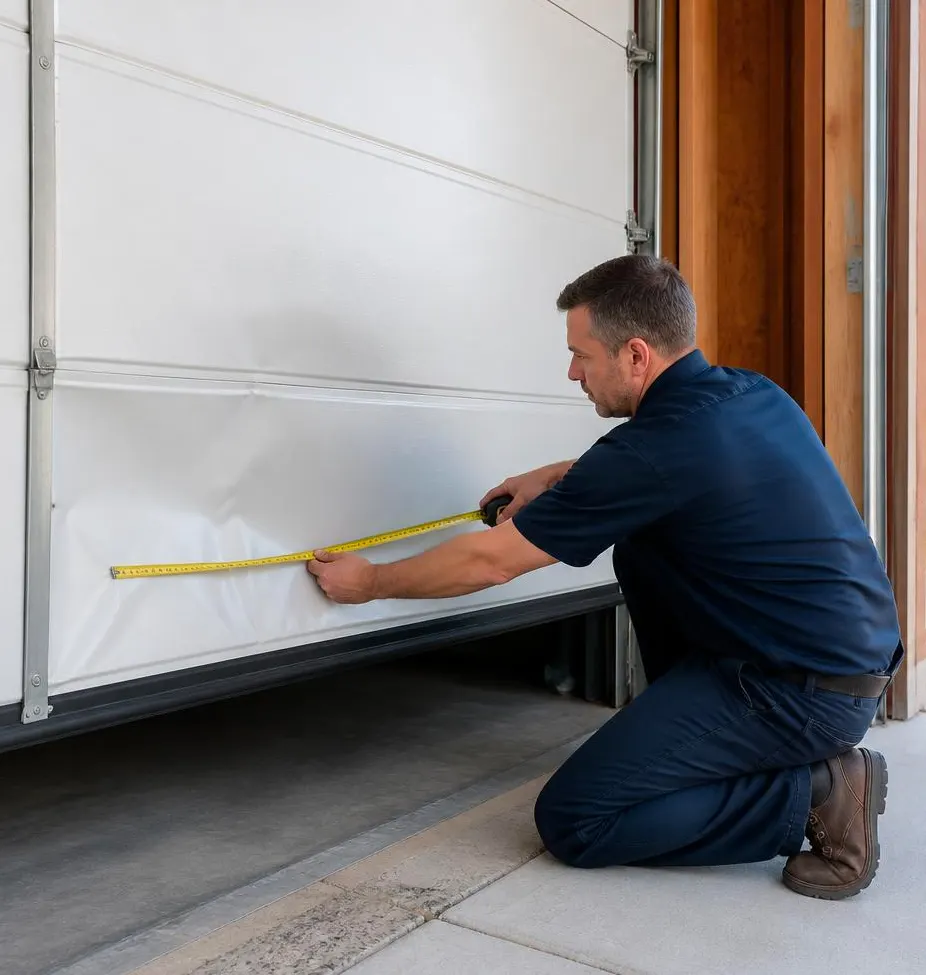
What a Technician Sees After a Storm Call in This Area
The call usually comes the morning after a rough night: wind gusts rattled the house, rain came in sideways, and now the garage door won't sit right. On site, the pattern repeats often enough to be predictable. A horizontal track has pulled an inch away from the wall where the lag screws tore through soft, moisture-softened wood framing. A panel is bowed outward in the middle like it took a breath and never let it back out. Sometimes the door looks fine from the outside, but the opener's sensors are coated in a film of pollen and humidity and won't talk to each other, so the door reverses every time it tries to close. None of this is random. It's what happens when a large, mechanically operated panel faces wind pressure it wasn't braced for.
Why the Garage Door Is a Home's Weakest Wall
Every other wall in a house is a continuous, rigid structure. The garage door is the opposite: a wide opening filled with a thin, segmented panel held in place by tracks, rollers, hinges, and a spring system doing all the real work. When straight-line wind or storm gusts push against the front of a house, that door panel absorbs more pressure per square foot than almost anything else on the exterior. If it fails and blows in, the sudden pressure change inside the garage can push upward on the roof structure from underneath, which is why wind-damaged garages are so often tied to roof damage in the same storm. A door that holds is doing structural work, not just keeping the car dry.
Why This Matters Right Now in Carroll County
Fall in this part of Georgia isn't hurricane season on the coast, but the remnants of named storms regularly track inland and arrive here as heavy rain bands with bursts of high wind, sometimes well after the storm has been downgraded. Add in the area's usual pattern of saturated ground from earlier rain, pine trees close to homes, and garages that sit in shaded, moisture-prone spots, and you've got conditions where a door that was marginal in summer becomes a real liability in a fall windstorm. Wood trim around garage openings that's been slowly softening from humidity all year is exactly the trim that tears loose first when a gust loads up the door.
Pre-Storm Checklist
- Inspect the tracks and mounting hardware. Look for bent rails, loose lag screws, or any gap between the track bracket and the wall framing.
- Check rollers and hinges for wear. Cracked or worn rollers let the door rack side to side under wind load instead of staying square in the track.
- Test the weatherstripping along the bottom and sides. Cracked or flattened seals let wind-driven rain push straight into the garage.
- Lubricate moving parts with a garage-door-specific lubricant, not household oil, so hinges and rollers move freely instead of binding under pressure.
- Test the auto-reverse safety feature and clean the photo-eye sensors, since pollen film and humidity buildup are common causes of false reversals in this region.
- Confirm the opener has battery backup or a manual release you can reach, since storm outages here often knock out power before they knock out internet or cell service.
Wind-Rated Doors and Bracing: What's Worth the Upgrade
Not every home needs a full wind-rated door, but for garages that face open yards, tree lines, or the prevailing storm direction, it's worth knowing the options. Aftermarket horizontal bracing kits reinforce the inside of an existing door and generally run in the $150-$300 range nationally. A full wind-rated replacement door, built with reinforced panels and heavier track hardware, typically falls in the $1,200-$2,500 range depending on size and material. The trade-off is straightforward: bracing is cheaper and works with what you already have, while a wind-rated door is a long-term fix that also tends to hold up better against the humidity and pine debris common around garages here.
After the Storm: What to Check
Once the wind has passed, walk the door before you run it. Look for new bowing in the panels, water staining along the bottom section, or daylight showing at the edges where there wasn't any before. If the door struggles to open smoothly or makes a new grinding or popping sound, stop using the opener. A torsion spring that was already near the end of its life can fail completely after the added stress of a storm, and a spring under tension is not something to troubleshoot yourself.
When to Call Carrollton Garage Door
If your door bowed, a panel cracked, or the opener started acting erratic after a storm, that's a job for a technician, not a weekend fix. Carrollton Garage Door handles both garage door repair and spring replacement for homes across Carroll County, and can assess whether your current door needs bracing, a hardware repair, or a full replacement before the next system rolls through.
If you're in Carrollton, Villa Rica, Bremen, Bowdon, Temple, Whitesburg, Roopville, or Mount Zion and want your garage door checked before the next round of fall storms, call Carrollton Garage Door for a straightforward inspection and honest recommendation.